

Focusing on quality and pursuing excellence
|
|
Sound permeable, waterproof, oil proof, and breathable mold
Collect
Possible issues that handheld electronic devices may encounter: If there is no barrier protection between the speaker and receiver, foreign objects such as water and dust may adhere to the speaker or receiver during long-term use, which will seriously affect the sound quality. Sometimes handheld electronic devices have to work outdoors in environments with rain and mist, and even underwater. In order to prevent water from seeping into the equipment and affecting the operation of electronic devices, it is necessary to carry out a sealed design. And the design of airtightness will inevitably affect the sound The internal pressure changes of electronic devices can quickly have a negative impact on the reliability of electronic components. The above pressure difference is mainly caused by two environmental changes, namely: rapid temperature changes, such as people walking from warm indoor environments with handheld electronic devices to very cold outdoor environments, and the situation of handheld aircraft taking off and landing. These pressure differentials may cause two performance issues: A sudden drop in external ambient temperature can cause a rapid decrease or increase in internal and external pressure, causing the sealing strip of the shell to withstand significant pressure fluctuations from the external environment. Over time, repeated cycles of high/low pressure will damage the seal, allowing water and pollutants to enter the equipment, leading to equipment failure. When equipped with water sensitive microphones or receivers, the accumulation of pressure in the sound chamber or sound chamber will cause stress on the microphones or receivers, resulting in distortion or attenuation of sound input or output. How can Lede solve the problem of preventing rainwater from seeping into the equipment while effectively diverting accumulated air pressure? The use of Lede waterproof and sound permeable film can effectively solve the problems encountered above Lede waterproof and breathable film is made of dispersed PTFE resin as raw material, stretched and expanded polytetrafluoroethylene film. This product is composed of multiple small micro pores that are interlocked in three dimensions, allowing gas to freely enter and exit the equipment, and sound can diffuse through the small pores. At the same time, small micropores are smaller than water droplets and dust, thereby preventing water droplets and dust from entering the equipment. At the same time, the sound emitted by the internal microphone of the equipment causes the vibration of the Lede waterproof and breathable film, which spreads the sound outside the equipment along with the vibration of the Lede waterproof and breathable film; The same external sound can also cause vibration of the Lede waterproof soundproof membrane, and the vibration of the Lede waterproof soundproof membrane will be sensed by the receiver, thereby transmitting external sound into the device. The three-dimensional small pores of the Lede waterproof and sound permeable film allow air molecules to freely swim, allowing the air pressure inside and outside the equipment to quickly reach equilibrium, effectively relieving the pressure difference caused by temperature and sea level changes, and relieving the stress on the microphone or receiver, achieving high fidelity sound transmission. application area
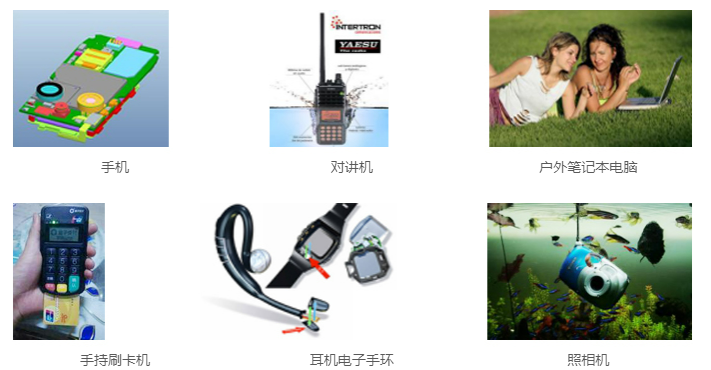
Mobile phones often come into contact with water when used outdoors, or when people slide their phones into the water during activities, there is a requirement for sealing. To meet the sealing requirements and ensure normal sound transmission, Lede Company's waterproof and sound permeable film can make people's dreams come true. The walkie talkie is an outdoor equipment that needs to be applied in many engineering, security, and military fields. It also requires both waterproof, dustproof, and high fidelity sound transmission. Laptops are often used in the wild due to business needs, which also require both waterproof, dustproof, and high fidelity sound transmission. Handheld card scanners are often used outdoors due to business needs, such as express delivery, insurance, etc., which also require both waterproof, dustproof, and high fidelity sound transmission. Wireless and wired headphones, car audio or Bluetooth systems, GPS systems, and smart wristbands are all recently emerging electronic products for outdoor use that require both waterproof, dustproof, and high fidelity sound transmission. Sometimes there is rain in the application of the camera, sometimes it is taken underwater, and sometimes it falls from high altitude to the ground or rises from the ground to high altitude. The changes in these situations require the camera to undergo waterproof and dustproof sealing treatment, while also addressing the distortion caused by the pressure difference accumulated by air pressure.
Storage requirements 1. Avoid direct sunlight, approach heat sources, and dust 2. Storage time not exceeding 1 year
1. Arrange the installation position of the diaphragm in an upright direction to avoid dust accumulation 2. Apply a clear positioning line at the location where the diaphragm is installed, most notably a limit step 3. The surface roughness of the installation shall not exceed 0.4 µ m Ra. 4. Ensure a clean environment to prevent dust from interfering with the installation effect 5. Ensure that the installation surface is clean and dry 6. Avoid sharp components from touching the waterproof and breathable membrane 7. Please wear clean rubber fingertips or gloves to avoid direct contact with waterproof and breathable membranes 8. Prepare blunt edged tweezers and do not use pointed tweezers that may damage waterproof and breathable products.
Extracting membranes from profiles Method 1: Roll up the release material, separate the waterproof and breathable membrane from the release material, and separate it to about 1-2mm before using a camera to extract the membrane
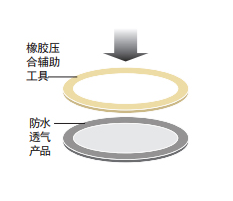
Attach film Accurately place the diaphragm within the target limit range If there is a secondary mucosal film, the previous film should be removed, the adhesive area should be cleaned first, and a new film should be applied After positioning the membrane, use your fingers to apply a pressure of about 30000 pa vertically and continuously on the membrane for 5 to 10 seconds To ensure effective adhesion, rubber assisted pressing tools should be used Rubber auxiliary tools should match the annular backing adhesive Rubber has a hardness of approximately 30 degrees and a thickness of 2 to 5mm The compression pressure is about 30000 pa The auxiliary pressing time is approximately 24 hours
Inspection after installation 1. Is it well positioned 2. Is the waste material of the release material attached to the membrane? If so, it should be removed 3. Whether there is ash or foreign matter, if there is, it should be blown away Remove defective film If any defects are found during production or use, the damaged diaphragm needs to be removed. 95% medical alcohol or white electric oil can be used to remove the back glue on the membrane.
Related products
|